
What Sherburne County Court Dockets Show
A docket is the court’s schedule and event list for a case. In Sherburne County, docket information comes from District Court because Minnesota does not use a separate municipal, justice, or county court for local trial matters. A docket may show the case number, party name, hearing time, hearing type, courtroom, Zoom location, judicial officer, and connection type. In the full case record, the Register of Actions also works like a docket because it lists filings, notices, hearings, orders, dispositions, and other case events in date order.
Dockets answer a narrower question than a full file. They help a person confirm whether a hearing is set, whether an event has occurred, and which court location or remote appearance method is listed. They do not always provide the complaint, motion, order, exhibit, certified copy, or final decree. For full file review, use Sherburne County court records through MCRO or Court Administration.
- Register of Actions
- The chronological case event list in MCRO.
- Hearing Type
- The court event label, such as arraignment, omnibus hearing, sentencing, pre-trial, or review hearing.
- Connection Type
- The role tied to the calendar line, such as defendant, plaintiff, petitioner, respondent, or attorney.
Sherburne County Court Dockets Calendar
The Minnesota Judicial Branch Sherburne County District Court page links a local public calendar PDF for hearings. The research file notes that the calendar is posted at 7:00 a.m. each business day and updated hourly. That timing matters because a morning calendar printout may be stale later the same day. The calendar is a practical first stop for same-day or near-term appearances, especially when the searcher knows the party name, hearing date, or case number.
The calendar examples reviewed for Sherburne County included courtroom locations such as Court Room 1, Court Room 3, Court Room 4, and Zoom. Hearing types included bail hearings, arraignments, plea hearings, sentencing, omnibus hearings, pre-trials, probation violation hearings, eviction hearings, conciliation hearings, default hearings, order-for-protection hearings, recommitment hearings, Jarvis hearings, and motion summary judgment hearings. Those labels help users tell whether the docket is criminal, civil, family, probate, traffic, or conciliation.
The manifest includes a court-docket image tied to Sherburne court fee information, which is often checked alongside docket and copy questions.
The Sherburne County District Court fee schedule lists copy, filing, judgment, probate, divorce, and expungement fees.
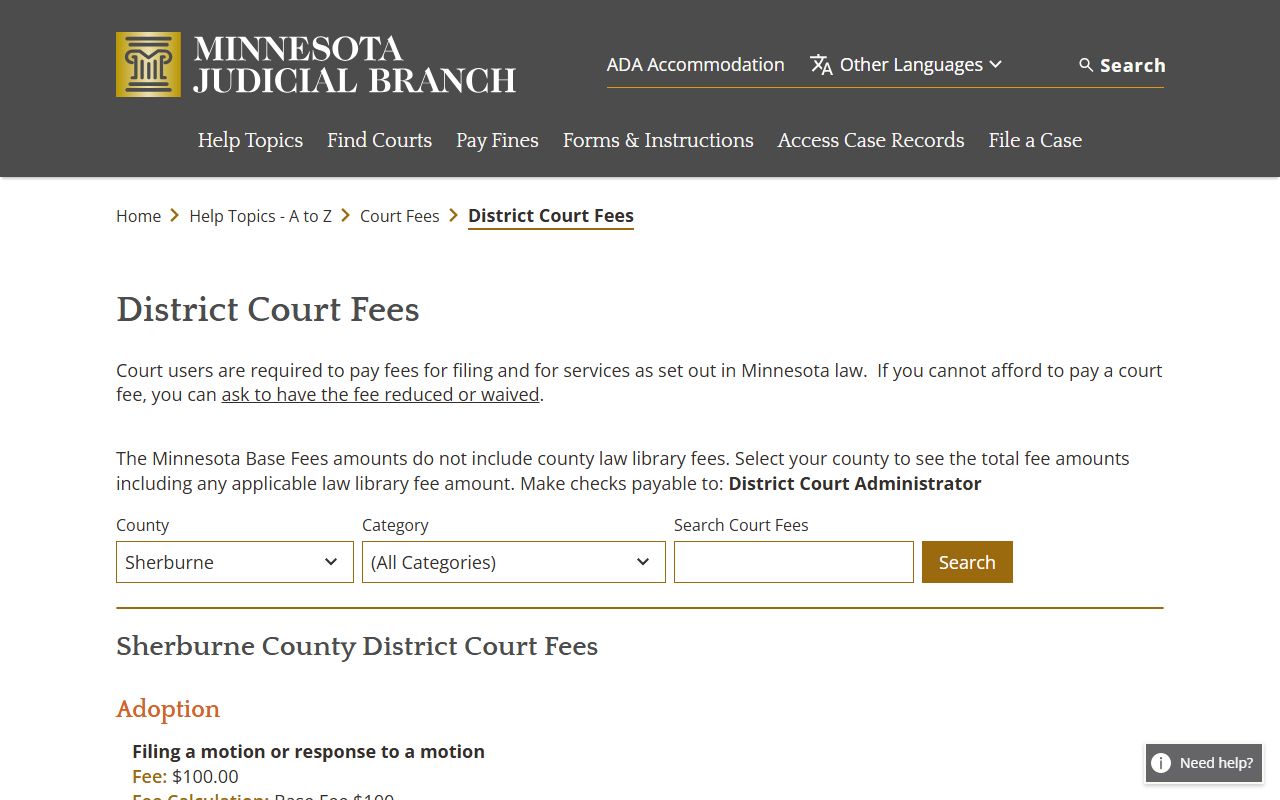
Docket users often need that fee schedule when a hearing entry leads to a request for a certified copy or printed case report.
Find Sherburne County Court Dockets Online
MCRO Hearing Search is the main online tool for looking up scheduled hearings in Sherburne County District Court. It searches by name, case number, judicial officer, attorney name, attorney bar number, and date. The county filter should be set to Sherburne when the goal is only local dockets. A case-number search is often stronger than a name search, especially for pending criminal, traffic, and petty misdemeanor matters that do not return by defendant name if there is no conviction.
- Open MCRO Hearing Search and accept the court access terms.
- Select the tab that matches the known information, such as Name, Case Number, Judicial Officer, or Attorney.
- Enter the date or date range if the hearing date is known or narrow enough to search.
- Choose Sherburne County under Court Locations before running a local docket search.
- Compare the hearing result with the public calendar or Case Details if the case status must be confirmed.
MCRO can time out after inactivity, and reCAPTCHA can appear. If a search fails, official guidance suggests slowing down clicks, clearing cache, changing browser, avoiding VPN or proxy use, and trying a standard browser window rather than private browsing.
Sherburne County Docket Entry Fields
The public calendar and MCRO hearing results use fields that need to be read together. A hearing type alone does not prove the final outcome. A sentencing line, for example, means a sentencing event is scheduled or listed; the final sentence should be verified in the case details or certified court record. A Zoom location means the court has identified remote appearance information for that entry, but parties should still follow court instructions and confirm any appearance requirements with Court Administration.
| Field | What It Shows |
|---|---|
| Party Name | The name visible on the public calendar entry, subject to privacy and access limits. |
| Hearing Location | Courtroom or remote location, including examples such as Court Room 1, Court Room 3, Court Room 4, or Zoom. |
| Hearing Date and Time | When the hearing is scheduled, with updates possible after the daily posting. |
| Judicial Officer | The judge or judicial officer assigned to the listed event. |
| Hearing Type | The event label, such as pre-trial, omnibus, bail hearing, plea hearing, eviction hearing, or sentencing. |
| Connection Type | The listed role, such as defendant, plaintiff, respondent, petitioner, or attorney. |
| Case Number | The court file number, such as observed 71-CR, 71-CV, 71-FA, 71-PR, 71-VB, or 71-CO formats. |
Sherburne County Court Dockets by Court
All local trial-court docket work for Sherburne County routes through Sherburne County District Court. The Tenth Judicial District Administration oversees district courts across Anoka, Chisago, Isanti, Kanabec, Pine, Sherburne, Washington, and Wright Counties, but the district administration office does not hear individual Sherburne County cases. Case proceedings occur in the county district court, and dockets appear through the county court calendar or statewide MCRO tools.
| Court or Office | Docket Role | Where to Confirm |
|---|---|---|
| Sherburne County District Court | Schedules and hears civil, criminal, family, juvenile, probate, traffic, and conciliation cases. | MCRO Hearing Search, public calendar, Court Administration. |
| Sherburne County Court Administration | Maintains court records, schedules hearings, collects fees and fines, and answers clerk questions. | Office counter or phone at the Government Center. |
| Tenth Judicial District Administration | Administrative office for the district, not a hearing court for individual cases. | District administration page for regional structure only. |
There are no separate Sherburne County municipal, justice, or county court dockets in the research file. Traffic, petty misdemeanor, civil, family, probate, and criminal hearings use District Court channels.
Dockets vs Sherburne Court Records
A docket is a map of case activity, while the full case record is the larger file. The docket can tell when a hearing is set and what event occurred. The full record may hold the complaint, petition, motion, order, judgment, sentencing entry, or public document. MCRO brings these together in Case Details for many public cases, but document availability still depends on case type, filing date, access rule, and whether the document is allowed online.
| Point | Court Docket | Full Case Record |
|---|---|---|
| Main Use | Track hearings and case events. | Review filings, orders, outcomes, and public documents. |
| Best Tool | Public calendar or MCRO Hearing Search. | MCRO Case Search, Document Search, or Court Administration. |
| Typical Data | Date, time, location, hearing type, officer, party role. | Register of Actions, parties, claims, charges, financials, dispositions, documents. |
| Certification | Not a certified court copy. | Certified copies must come from Court Administration. |
Note: A docket event can be accurate without showing every document or restriction in the case file.
Limits on Sherburne County Court Dockets
Some Sherburne County court dockets are limited by the same public access rules that limit court records. Domestic abuse order-for-protection cases and harassment restraining order cases are not shown remotely. CHIPS matters, juvenile delinquency felony 16 cases, civil commitment documents, adoption files, sealed matters, and expunged cases may not appear online. Pending criminal, traffic, and petty misdemeanor matters without convictions are especially important because a defendant-name search may not return them.
The better fallback is a case number, citation number, attorney search, or Court Administration contact. A party who has received a summons, citation, warrant notice, or court document should rely on that official case number rather than only a name search. For court dockets, the public calendar can be useful, but it should not be treated as the final word on appearance obligations if the court has issued a direct notice.
Note: Always confirm a hearing directly with court administration if a missed appearance could create a warrant or default.
Confirm Sherburne County Court Dockets
Sherburne County Court Administration is the local clerk function for docket questions. The Minnesota Judicial Branch lists Katrese Ringham as court administrator. The office keeps case records, schedules hearings, collects court fees and fines, and manages the court calendar. The county directory lists Court Administration at the Sherburne County Government Center in Elk River with weekday business hours. Morning hearing check-in starts at 8:00 a.m., and afternoon hearing check-in starts at 1:00 p.m. according to the county directory.
Sherburne County Court Administration
13880 Business Center Dr NW, Suite 100
Elk River, MN 55330
763-284-7140
Monday-Friday, 8:00 a.m.-4:30 p.m.
The second assigned docket image comes from the local Court Administration directory.
Sherburne County’s Court Administration directory lists the local address, phone, fax, hours, and check-in times.
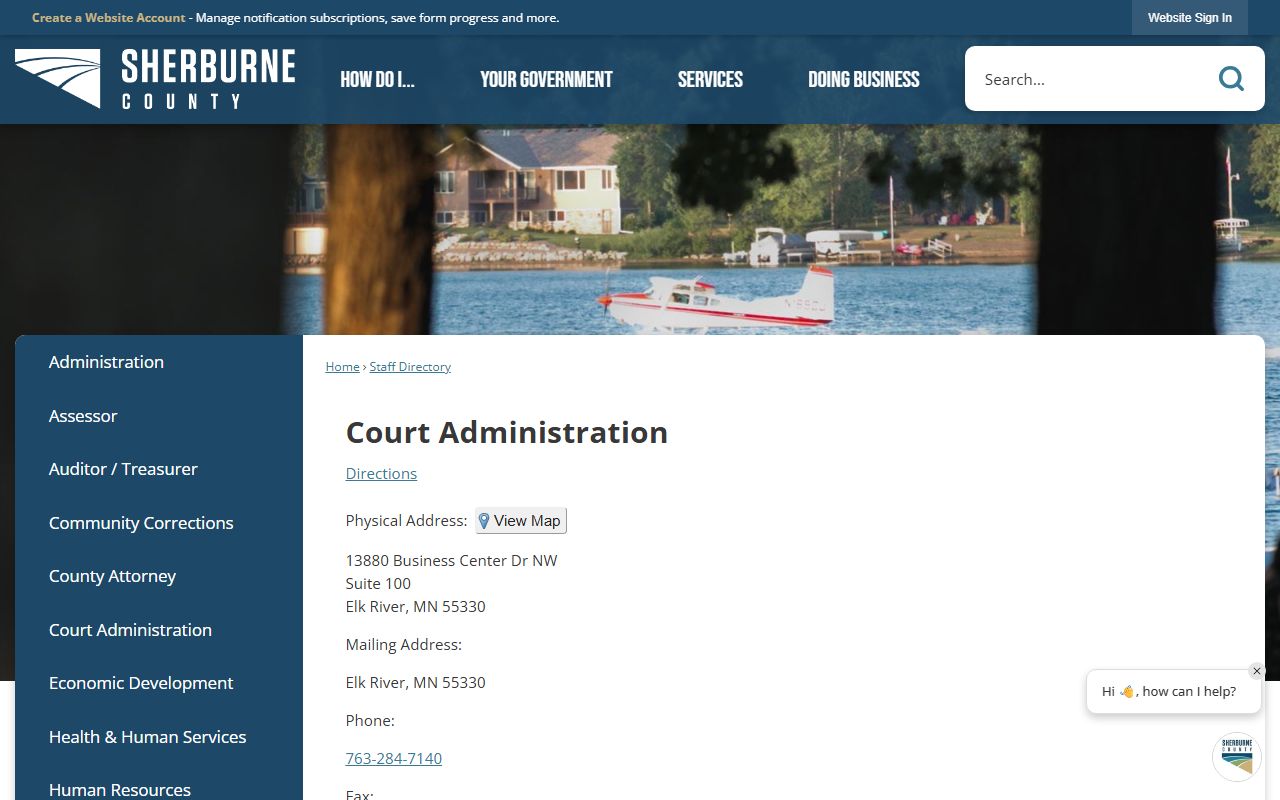
That office is the safest confirmation point when an MCRO docket entry, public calendar line, or mailed notice appears to conflict.
Docket questions should not be sent to the Sheriff unless the issue is law enforcement custody or warrant process. For that separate lane, Sheriff Joel Brott's office and the county's public data request process handle non-court county records.